Cutting steel and operating economy
A common mistake many people make is choosing the wrong type of steel. When it comes to ploughing, this is true: On blacktop, carbide and slush blades provide the best overall economy, while with a white-road strategy, you can often use one universal steel rather than switching between two or three different types.
Hard metal
For our tungsten carbide inserts, it is important to emphasise that we only use newly mined tungsten carbide. Because tungsten carbide bonds with cobalt, you get a very strong bond when the material is new, which provides significantly better wear resistance. Recycled tungsten carbide lacks these crystal arms and has a poorer bond with the cobalt, resulting in a shorter service life. Therefore, we can safely say that we deliver the best quality on the market.

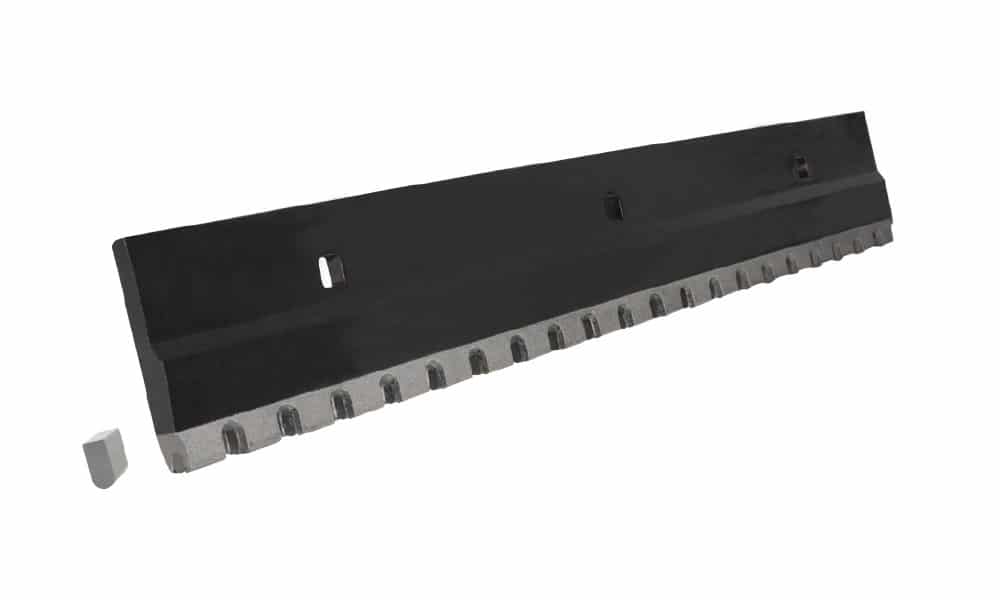
Serrated carbide for white walls
Serrated carbide blades with tungsten carbide brazed into each tooth. They provide a long service life and leave a rough surface - a solid choice for both ploughs and tillers.
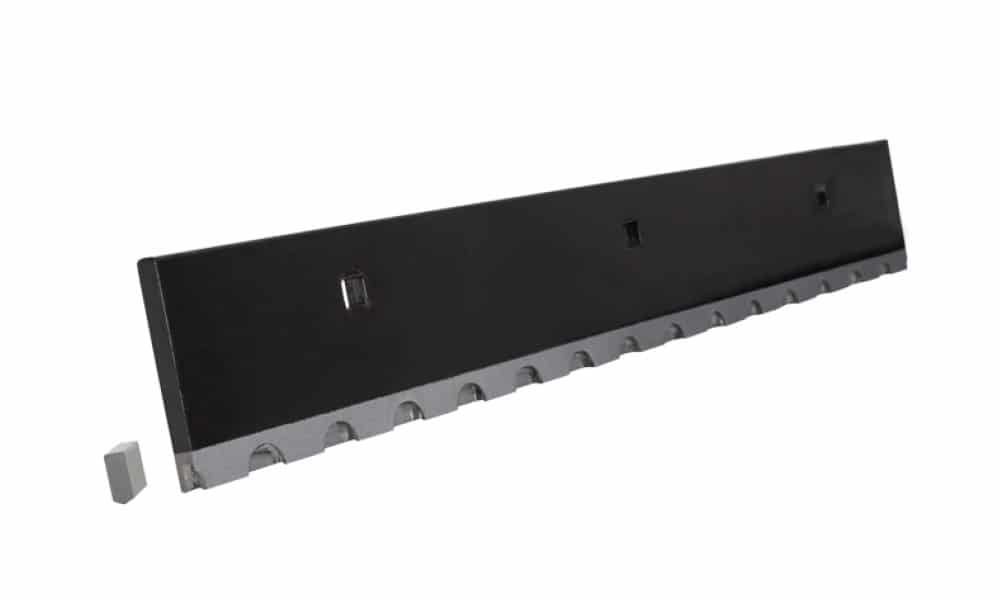
Vector carbide inserts for white walls
An innovative solution for unsalted roads. The blade combines the sharpness of a thin blade with the tear resistance of a perforated blade and the density of a smooth blade - and it lasts a very long time. The thickness is 16 mm, but the design means that the attack surface against the surface is much smaller. Preferably used for white unsalted roads.
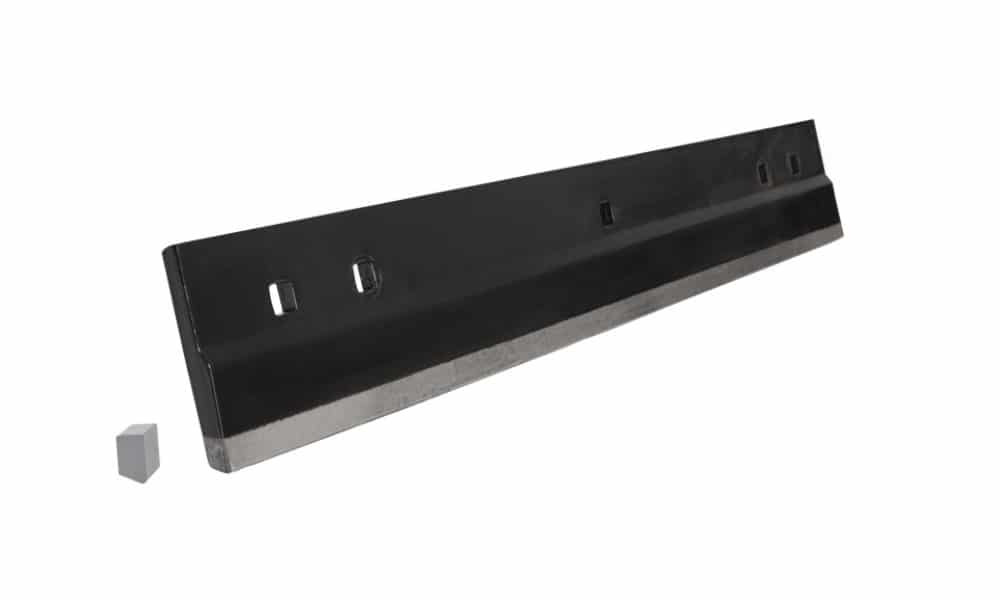
Black Cat carbide shear for black veG
For blacktop, either standard profile or high steel is used. Carbide inserts are significantly harder and more heat-resistant than hardened wear steel, and therefore last much longer without the need for relocation, turning or replacement. For smooth, unpaved roads, carbide inserts offer better economy than hardened wear steel. Our steels are always supplied with newly mined tungsten carbide for the best economy.
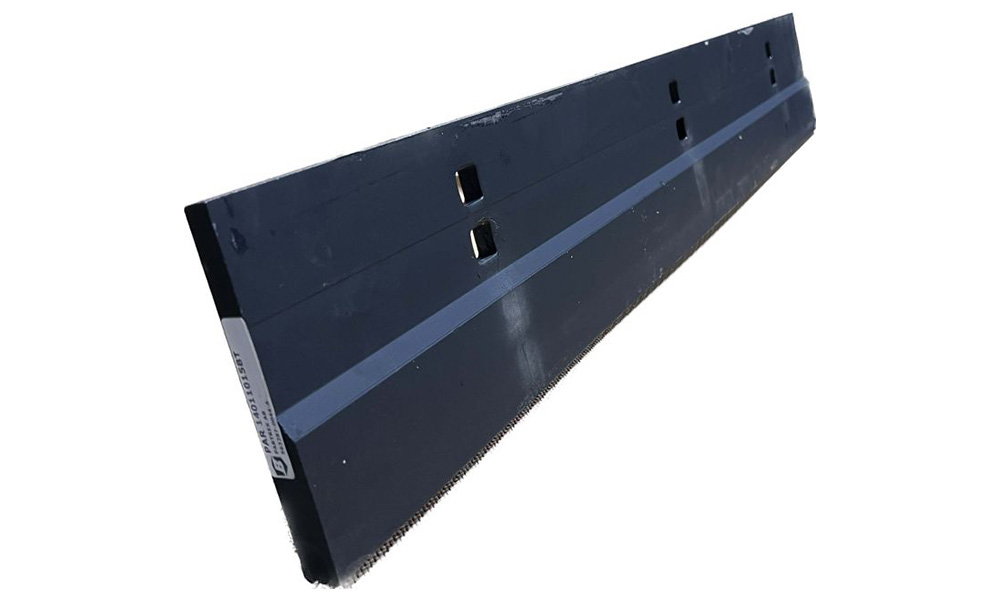
Nordviq Carbide high carbide
- High metal shear with 2 rows of holes
- Designed for side wings and high throwing ploughs
Nordviq

Wall steel Nordviq
Nordviq delivers steel with high wear resistance - the most hours per crown in its class. The blades are reversible, with a double row of holes (CC305 mm for KH16M screws - Nordic standard) and quality HBW500+. The thinner models are suitable for ice demolition, while the coarser ones are for snow and slush. They can also be used on graders in the summer. The coarser the steel, the quieter the plough runs; the thinner the steel, the better it cuts. Smooth steel is available in 12 and 20 mm, and we also have end-bent variants in 20 mm.

Wall steel Perforated NORDVIQ
Perforated inserts with integrated Nordic hole pitch (CC305 for KH16M bolts). Can be moved and flipped for optimal use. Hardness HBW500+. Suitable for levelling compacted snow and ice demolition, but also works well on gravel roads. Available in 9, 11 and 16 mm thicknesses, with heights of 180 mm (9 mm) and 240 mm (11 and 16 mm).
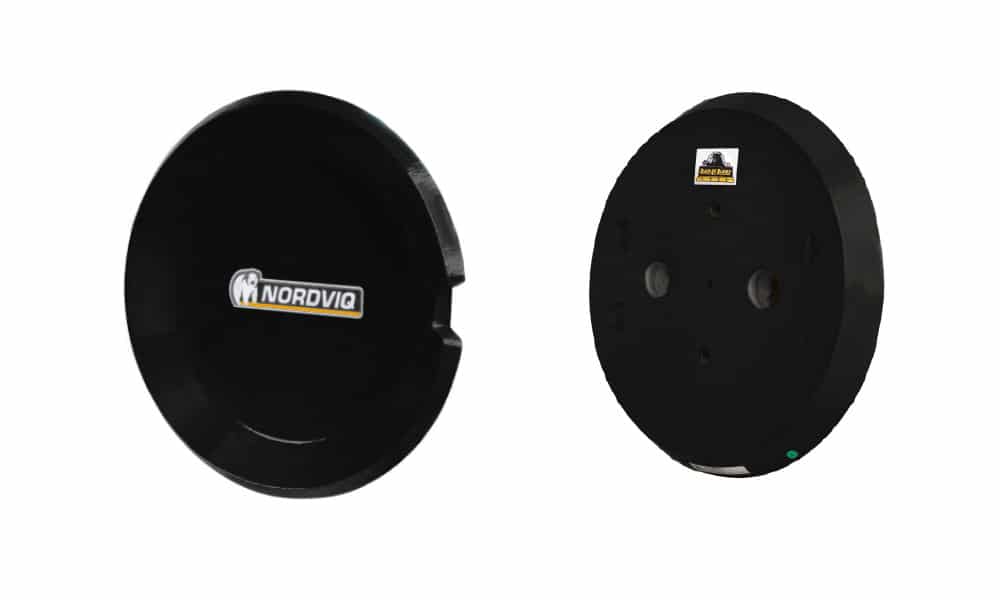
NORDVIQ trainers
NORDVIQ delivers both hardened and carbide-coated wear shoes. With wear shoes from Nordviq, you get the best value for money. Talk to our skilled sales staff about what's right for you.
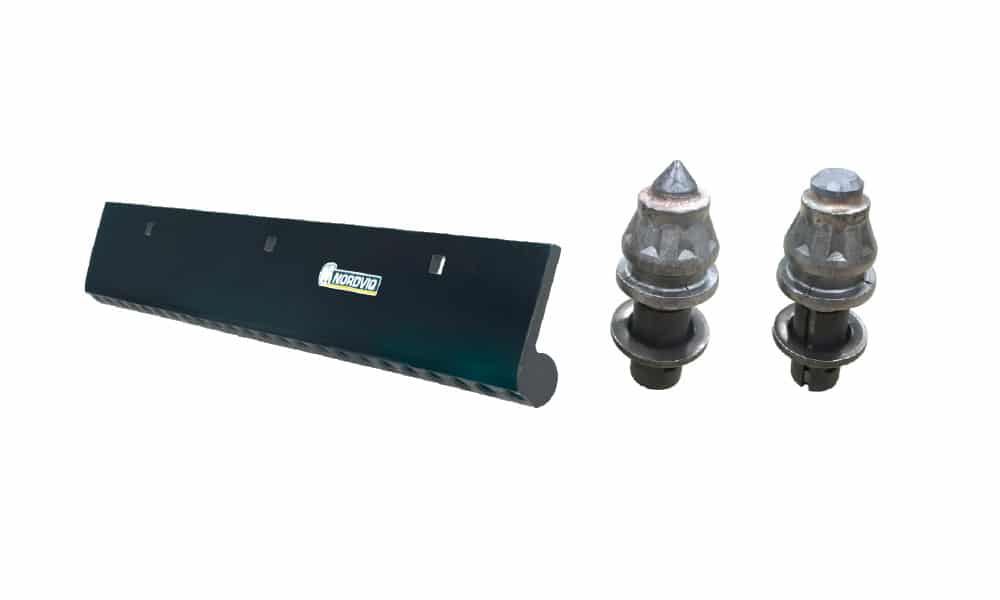
Other

System 2000 spikes
Developed by Kennametall and known for its high durability. With 8 studs per foot, this system provides excellent grip for demanding winter conditions. Can be mounted on snow ploughs and other road maintenance equipment. Supplied with both staple plate and loose staples.
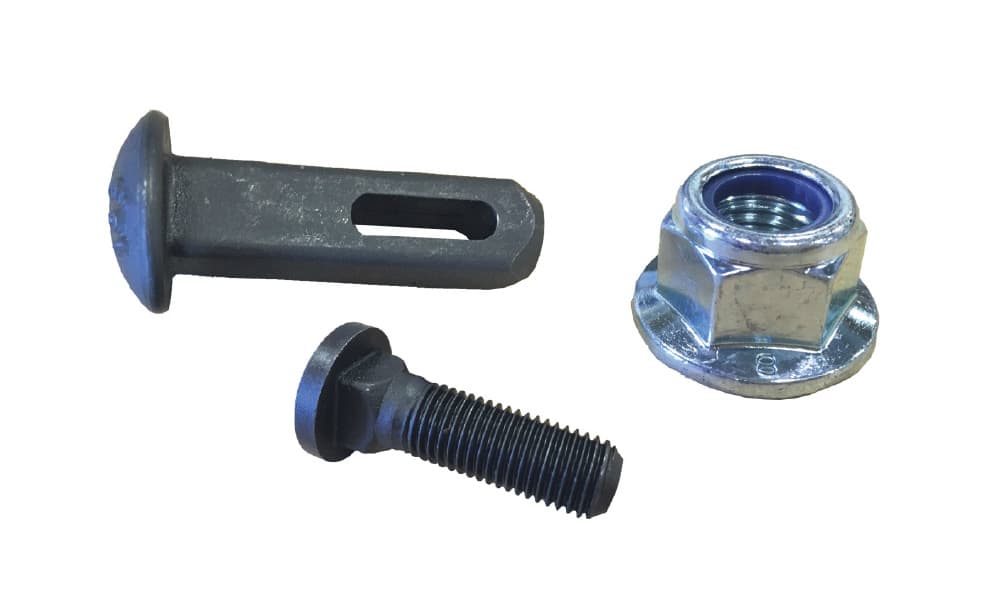
Mounting details for road steel
As a total supplier of wear steel, we of course have all your fastening materials too. Contact us to get the right parts for your equipment.
With Nordviq 500 plus, a range of cutting road steels, we believe we have found an optimal alloy that provides the best properties in terms of wear resistance. It has a superb combination of hardness, toughness and frictional heat resistance.
The strategies that work on white road are not the same for blacktop, as there are major differences in heat generation. Classic mistakes that are made are the wrong product on the plough and too high a speed. On black road you have an intersection of plus/minus 34 to 37 kilometres where the wear curve goes roughly straight up. Then there's the aspect of how much water there is in the snow.
If it's snowing at 12-15 degrees and you're driving for 40 kilometres, there's so little water in the snow that you have almost no cooling. After all, it's the friction that creates the heat. 40 kilometres of light snow results in much higher wear and tear than 40 kilometres per hour with 12 centimetres of slush, because the water cools the whole way. If there is 12 to 15 centimetres of slush, you might be able to drive 42 kilometres per hour and have the same wear and tear as you have at 32 kilometres per hour with dry snow.
Wear steel for snow blades
Wearing steel for snow blades is an essential component for efficient and long-lasting snow removal. These steel parts, which are attached to the bottom of the snow blade, ensure that the blade glides smoothly over the surface while protecting the blade itself from wear. With the right wear steel, you can significantly extend the life of your snow blade while ensuring smooth and efficient snow removal. The quality of the wear steel is crucial. It must be robust enough to withstand harsh winter conditions, icy roads and rough surfaces. That's why it's important to choose wear steel that's made from high-quality materials, designed specifically for harsh Nordic conditions. In addition to protecting the snow blade, the wear steel also helps to reduce friction between the blade and the surface. This allows the blade to glide more easily over the snow, resulting in cleaner and more efficient snow removal results.
Perforated wear steel
Perforated wear steel represents an innovative solution in wear steel technology. With its unique design, where the steel is perforated at regular intervals, it offers several advantages compared to traditional wear steel. The perforated structure allows for a better weight distribution, which can reduce the load on the equipment and extend its lifetime. One of the most notable benefits of perforated wear steel is its ability to reduce friction. The small openings in the steel allow snow, ice or other materials to pass through, minimising resistance and making it easier for the equipment to slide across the surface. This can result in a more efficient and smooth performance, especially in challenging conditions. In addition to improving performance, the perforated design also helps to reduce the weight of the steel. This can be particularly beneficial for larger machines or vehicles, where weight savings can contribute to better fuel efficiency and reduced operating costs. Perforated wear steel is also known for its durability. Although it has openings, it is designed to withstand harsh conditions and provides a long-lasting solution for those seeking a durable and efficient alternative to traditional wear steel.